How to Calm Your Nervous System Naturally (Without Supplements or Sedatives)
There is something quietly profound about holding a warm cup of herbal tea in your hands. In a world that moves faster than it ever has before — where notifications ping, deadlines loom, and rest feels like a luxury rather than a necessity — the act of brewing and drinking herbal tea feels almost radical. But this ritual is not new. It is, in fact, one of the oldest forms of intentional self-care known to humanity. Long before pharmaceuticals, before synthetic supplements, before the wellness industry became a billion-dollar machine, people turned to the earth for support. They found it in roots, flowers, leaves, and bark. They found it in plants.
Ancient herbal traditions span virtually every culture on the planet. In China, herbal medicine has been practised for over 3,000 years, with sophisticated systems mapping how specific plants interact with the body's energy pathways. In Ayurveda, India's ancient system of medicine, adaptogenic herbs like ashwagandha and brahmi have been prescribed for millennia to calm the nervous system, sharpen mental clarity, and support restorative sleep. Indigenous cultures across the Americas, Africa, and Europe built entire healing frameworks around plant medicine — understanding, long before the language of neuroscience existed, that certain plants carried specific gifts.

The good news is that you can actively shift this balance. The nervous system is remarkably responsive to specific inputs, and many of the most powerful tools for creating this shift are free, accessible, and require no supplements or sedatives whatsoever. They work by activating the vagus nerve — the longest cranial nerve in the body, which connects the brain to the heart, lungs, and digestive system and serves as the primary highway of the parasympathetic response.
Breathing is the single most direct and immediate tool available to you. The breath is unique in that it is the only autonomic function we can consciously control — and this control gives us a rare lever into the involuntary nervous system. Extended exhalations, specifically, activate the vagus nerve and shift the body into parasympathetic dominance. Techniques like 4-7-8 breathing (inhale for 4, hold for 7, exhale for 8), box breathing (equal counts of inhale, hold, exhale, hold), or even simply breathing out twice as long as you breathe in can produce measurable reductions in heart rate and cortisol within minutes.
Cold water exposure offers another powerful and immediate reset. Splashing cold water on your face, particularly the forehead and around the eyes, activates what is called the diving reflex — a mammalian response that dramatically slows the heart rate and shifts neural activity. Athletes and clinicians have used cold immersion for decades to modulate stress physiology, but even a brief cold shower or a bowl of cold water can produce a meaningful shift. The effect is rapid and requires no equipment, expertise, or cost.

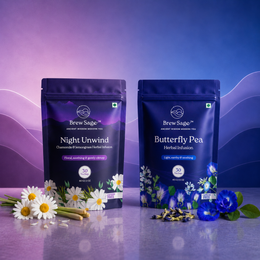
For those new to incorporating herbal rituals into daily life, the entry point is gentle and accessible. A morning cup of adaptogenic tea — perhaps a blend featuring ashwagandha and tulsi — can serve as a grounding ritual before the day begins. An afternoon tea of green tea with lemon balm can provide quiet focus without the jitteriness of coffee. A nighttime blend of chamomile, passionflower, and lavender signals to the nervous system that the day is ending and rest is approaching. These are not complicated protocols. They are small, intentional acts of care.
There is also something to be said about the ritual itself, separate from the pharmacology of the plants. In a culture obsessed with productivity, slowing down long enough to boil water, steep herbs, and drink mindfully is an act of presence. It teaches the nervous system — through the simple repetition of calm, sensory experience — that slowness is safe. That stillness is possible. That rest is not earned but necessary. The ancient herbal traditions understood this. The ritual was always as important as the remedy.
Modern herbalism is not about rejecting science or modern medicine. It is about recognising that plants are extraordinarily sophisticated chemists who have been co-evolving with human biology for hundreds of thousands of years. Our nervous systems recognise these compounds because, in many ways, we evolved alongside them. When we drink a cup of chamomile tea, we are participating in a relationship that is older than recorded history — and emerging research suggests that this relationship is genuinely beneficial, not merely placebo.
As interest in functional wellness continues to grow, herbs are finding their place not as fringe alternatives but as intelligent, evidence-informed additions to a modern health toolkit. The ritual is returning. The plants are waiting. And in the quiet act of brewing a cup of something ancient, we find one of the most effective things we can do for our overstimulated, under-rested modern selves: pause, breathe, and let the earth do what it has always done — support us.